5G and Open RAN Strategy with Public Cloud Integration
Sat, 26 Jun 2021 12:56:14, atika
This presentation primarily focuses on the Open RAN front further integrating to the cloud and particularly the adoption that operators are going as a combination of 5G and Open RAN with cloud integration, and more focus eventually going to be the future networks which are more on the public cloud which is starting initial steps.
Customer Demand in The Era of COVID-19
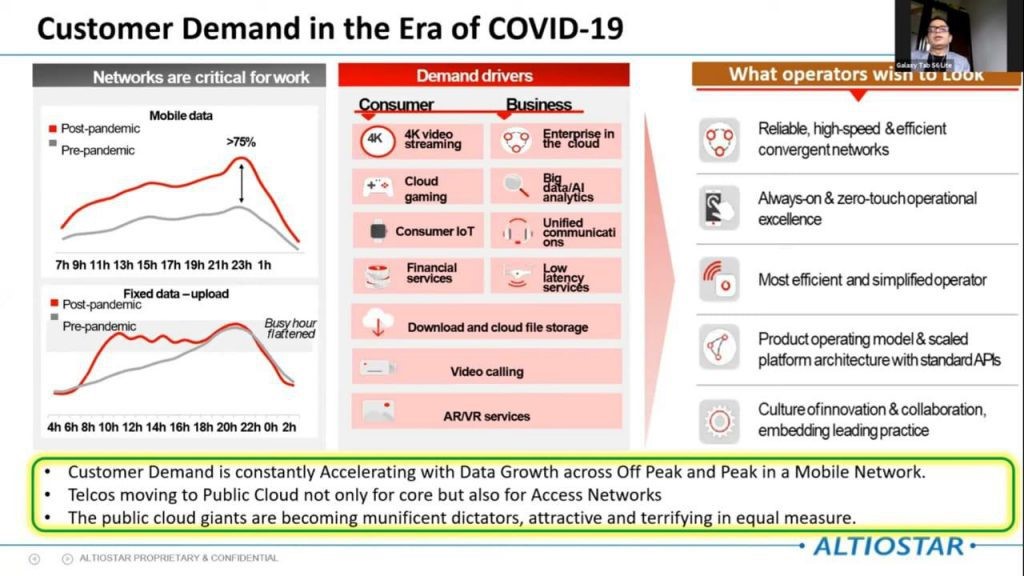
In pandemic situations particularly in the context of a network that has changed whenever they design, deploy, plan a network with respect to capacity the capacity is estimated and based on that one they offer the capacity. If look in a mobile network we have seen the capacity has grown up in this pandemic particularly when have to do design or deploy the network have fit into the maximum demand of the network, the maximum demand used to come at 23 hour at night and then it comes down in the morning time. From that is the maximum demand has gone up 75% and now that in turn has further accelerated a investment because the traffic need to be catered for the maximum demand, but typically in the past that the peak demand always goes up but in this particular scenario of the pandemic that is not only the peak but overall utilization of the mobile network has none up quite a lot.
The data taken from one of the leading operators of the world shows that data growth has not only happened in terms of mobile networks but it has also happened in the fixed network. In the case of mobile networks the adoption and the growth is much higher than in comparison to the fixed network. Now obviously that need to further linked with what is the demand drivers which are boosting this particular growth in the data adoption, there are various drivers particularly for consumer and business 4k video then enterprise cloud, gaming services, big data/AI analytics, consumer IoT, financial services or fintech particularly in asia pack there are a number of fintech of adult have done really a great job.
In this pandemic the online e-commerce sites and fintech they have integrated, in Indonesia Grab and Gojek have done is accepts exceptional and it has grown exponentially in the last two years then downloading of cloud file storage, video calling, AR/VR services that all of those are various kind of demand drivers which is now transforming the overall network capacity from a traditional growth pattern to a completely, extraordinary growth pattern. When this growth needs to be further fulfilled with investment and also consider or particularly the operator has to consider both investment quality of services automation all the best of the practices together, so the experience to the end user is going to be really good so a lot of new things are coming up. ORAN is one of the thing in Asia pack that already seen particularly Indonesia with the support of TIP, It has really made good entry in the Open RAN started seeing operators coming extremely innovative idea of putting overall network requirement in place integrating ORAN.
ORAN is going for splitting the hardware to software but particularly in Indonesia to manage the cost and improve the capacity it has seen operators have gone quite innovatively in splitting, not only for hardware and software but services also servers everything is split manner and individually working out a cost optimization of that particular component. Further everything is going to be integrated by a system integrator so everything remains open in the requirement that is great learning, possibly Altiostar see from Indonesia market and Indonesia operators.
How ORAN Adoption Helps Operators?
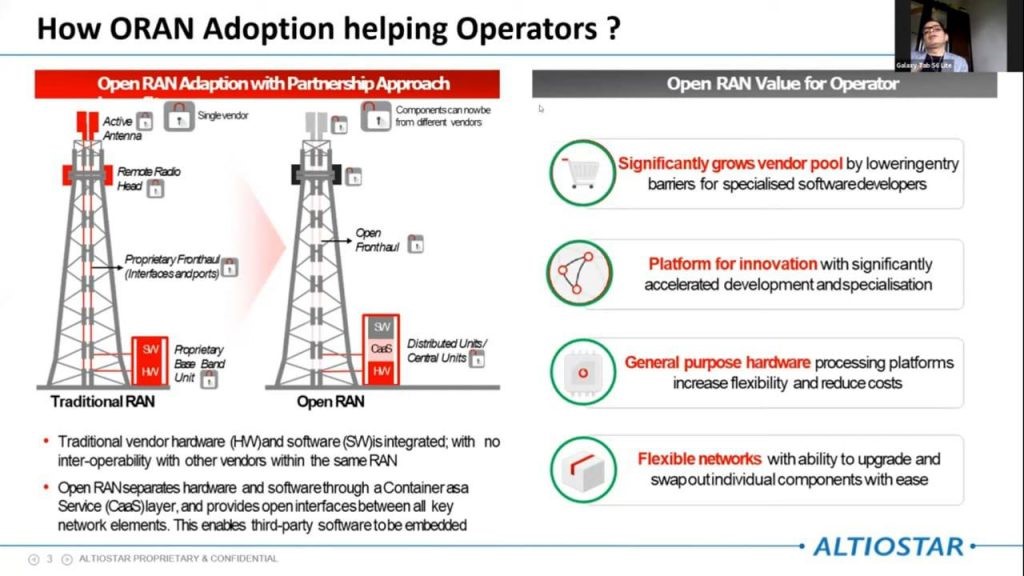
That is a traditional network where every interface, software and hardware are closely staged and Indonesia has experienced that particular complication for the last number of decades. In Indonesia, operators have gone for distributing each and every component including hardware, software, services, servers, virtualization. Everything is talking differently. They are putting a lot of efforts to optimize the overall cost and further invest into capacity and build up a completely open network that is next generation centric. In the Open RAN model everything is open it is further containerized and overall benefits are going to be realized or the benefits are multifold for operators. Technology has adopted openness and has gone benefiting the customers in multifold than a closed architecture or network that is deployed.
Cloud Computing in Telco
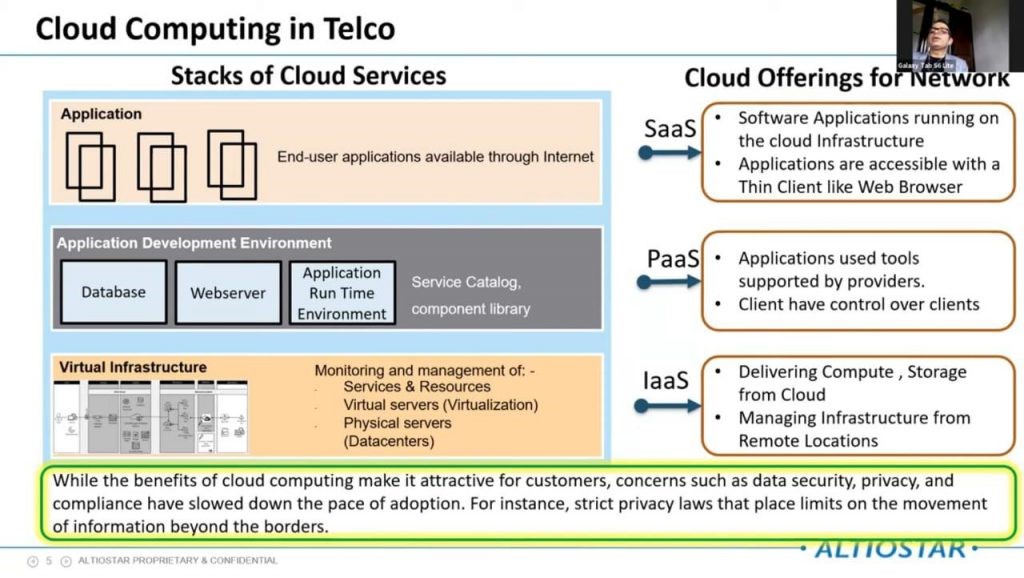
That is the kind of flexibility that Open RAN has brought to the network, now the Cloud computing in the Telco domain on the stack components of the cloud services Altiostar has an application development environment and virtualized infrastructure. Now the virtualized infrastructure is correlated to a Open RAN network it is a combination of storage and servers, in the development platform and the application those remain primarily the virtualized and software applications including AIML those kind functions.
In particular model it closely, typically in the past the mobile network they don’t do business based on the SaaS, PaaS and IaaS based model, but today those things which used to be on a data center or a cloud centric architecture is well integrated to a operator’s overall commercial and investment model. It is going to give a lot of benefit and direction for the operator on what to invest, what not to invest and how the cost is going to be distributed. Not only is everything going to be its own CAPEX but also it will be different ecosystem partners.
Software Centric Architecture Provides Flexibility to Operators
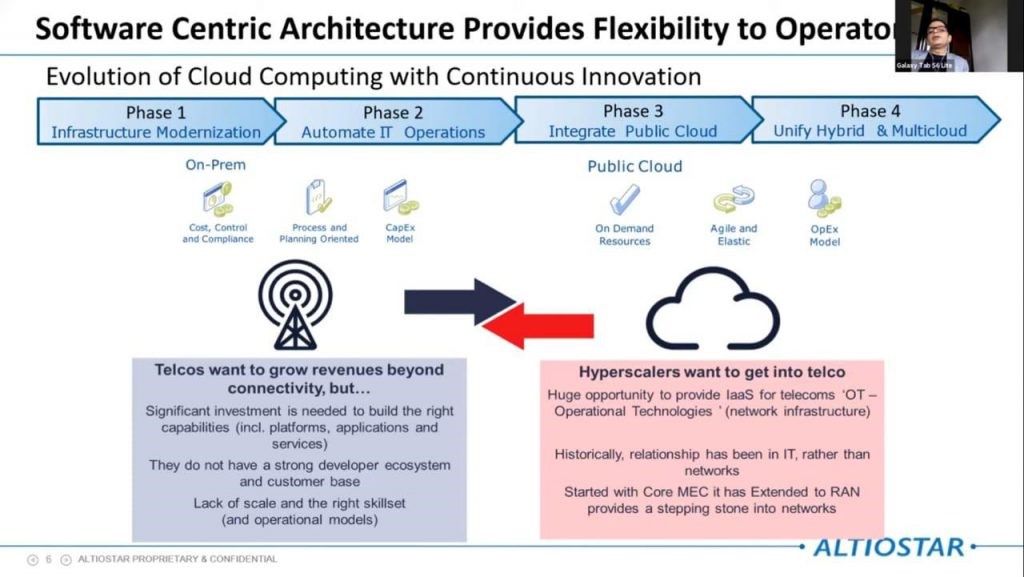
The adoption of cloud computing has infrastructure modernization , IT operation automation, public cloud then hybrid cloud. It can be on premises and public cloud but there is a close match now coming between the Telco and the hyperscalers which are coming from the industry and jointly they are complementing each other and delivering value to operators.
The operators are able to realize what traditionally enterprise able to realize on their investment and innovation now in operators network, that is not only for the new areas like AIML, mobile edge computing, caching optimization, orchestration in those are but also in the traditional areas like access where the distribute unit and the centralized unit apart rom the radio can be virtualized and be taken up to a cloud, for the cloud it can be a public cloud or it can be a hybrid cloud.
Telcos Maturity with Adoption of Public Cloud
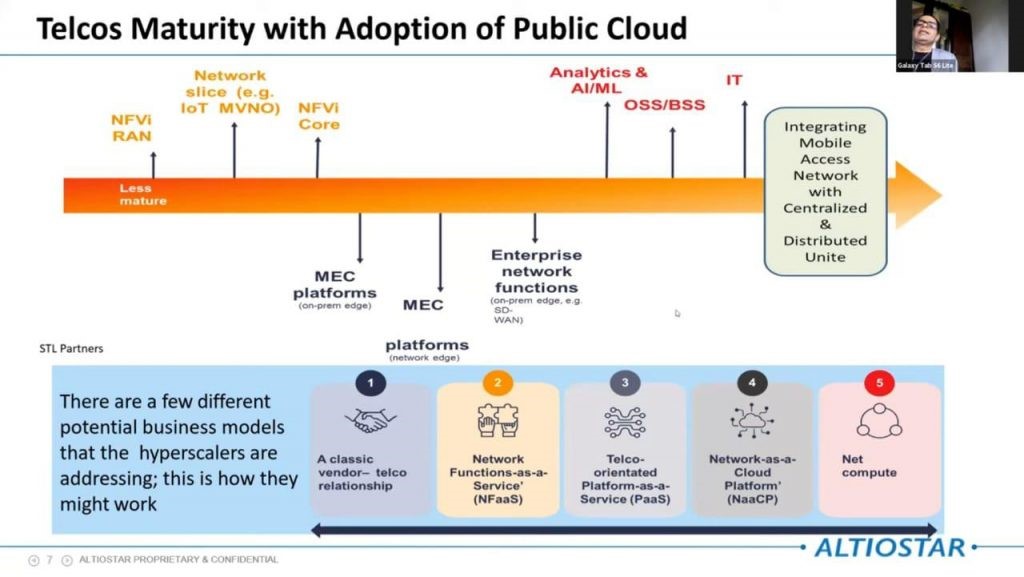
NFVi RAN which is less mature, network slice IoT, and if look at the OSS, BSS or the core component that is more virtualized for the example EPC, OSS, BSS, PCRF and HSS they are more virtualized then it has now started going to edge compute combination of public cloud as well as virtualization then eventually it is moving towards RAN further evolving and integrating the RAN components both from the hardware and software point of view. There are five different models that are coming out for operators:
- Is a traditional or classic vendor Telco relationship
- Network functions-as-a-service’ (NFaaSz)
- Telco oriented Platform-as-a-Services (PaaS)
- Network-as-a-Cloud Platform’ (NaaCP)
- Net computer
Case Studies Define Cloud Telco Relationship
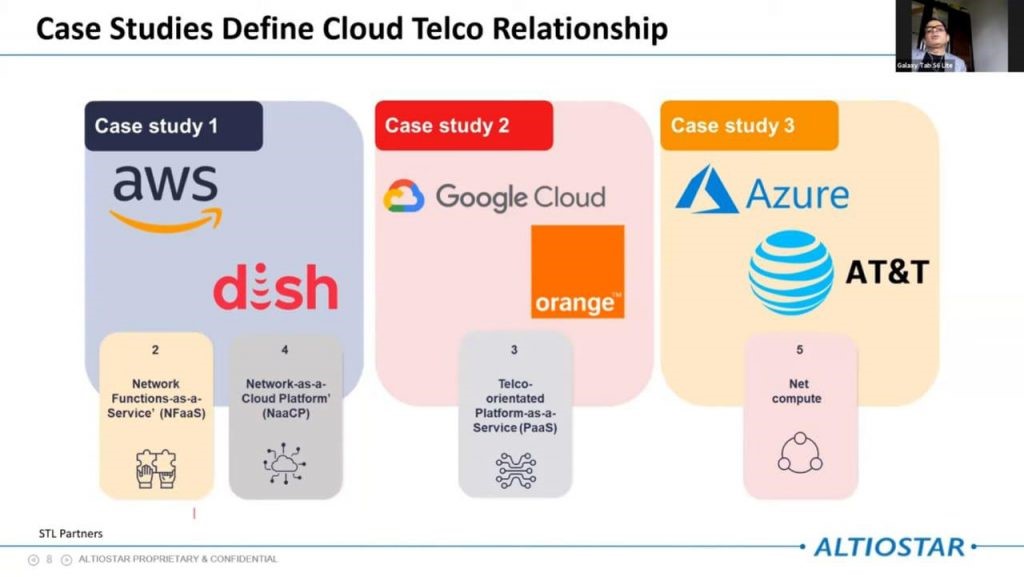
That is three examples how they have gone ahead with, in the U.S discuss operator which is the fourth operator with all of the U.S presents in terms licensing they have gone ahead for network as a function which is up to the access network as a cloud platform. Then Orange is working with Google cloud that is Telco oriented Platforms as-a-Service (PaaS), then Azure and AT&T they are working network as a computer. So in all of this, finding that the adoption of both software as well as network hardware are closely now integrating with private cloud and hyperscalers, the critical component here is that the overall TCO depending on the adoption goes down aggressively for operators.
The operator is able to get support from the cloud providers in deploying the network faster. There are various use cases which are more customizable for enterprise than consumer and are going to be well integrated with this kind of cloud model because the cloud people closely understand the enterprise application and business model.


