Sat, 24 Apr 2021 17:37:17, sysadmin, [category: openran-community]
Introduction to GCI
PT. GCI Indonesia was established in Indonesia in 2005. The head office located in Wisma GKBI, Jakarta. It is a well-known place you can easily reach this place by MRT or KRL.The operation office spread across the nation from North Sumatra until Manado. And GCI’s global presence spread across the Asia region until Algeria and Malaysia. Below is is GCI’s clients.
Business Scope

GCI Service is divided into 3 parts consulting & support services, radio network services, and telecommunication implementation. Then, from the 3 parts there are several more parts as shown in the picture above. The summary of GCI services can be seen in the figure on the left side.
GCI and OpenRAN Milestone
It all started with GCI’s involvement in the OpenRAN by joining as a member of TIP in mid-2020 and GCI selected as a local partner of the TIP community at Telkom university as a System Integrator (SI). Then, GCI is also developing 5G OpenRAN products and solutions. GCI plans to continue to contribute to TIP lab testing and hopes that GCI can provide this solution to the Telkom University Lab for the next cycle of 5G testing with products and solutions from GCI to be tested.
OpenRAN Integration Background
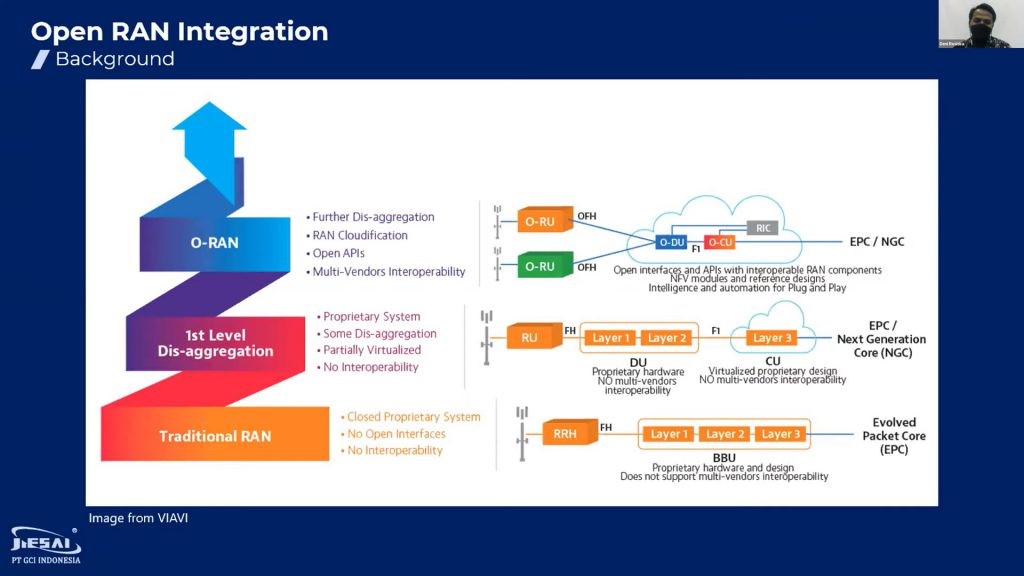
This figure was shared by VIAVI. On the left side, there is the orange ribbon which is located at the bottom that is traditional RAN that we already know for so long and until today we still working here. The idea of OpenRAN will lead us to the first level of disaggregation. This is the initial stage of the idea of OpenRAN disaggregation. Previously, one vendor could only work with BBUs with the same brand or the same vendor and they had a lock with a black box, one of the keys was under the CPRI interface.
The idea is to turn the black box into a white box that everyone can engage with. In the future there will be RRU with brand A that will work well with BBU brand B and so on. By this aggregation, the hardware itself will be disaggregated with this software so there will be a vendor for hardware and a vendor for software. Starting at this stage, we can see new opportunities if the Indonesian Telco community has only been able to buy equipment because they cannot produce by their self but now because in OpenRAN hardware can be independent and software can be dependent so if the Indonesian Telco community cannot produce the hardware itself a least they can develop the software.
The next stage of O-RAN will be fully disaggregated and everything will be close to the cloud except the physical component such as an antenna because until today antenna cannot be converted into software even there is software-defined radio but physical radio cannot be replaced. The impact of OpenRAN there will be more software. The software has been transforming the world from consumers to enterprise, even to telecom. OpenRAN is a great example of software transforming into your future. In the future, we will not only see OpenRAN but also Open Transport and Open Core by the end, it will be end-to-end open so everybody can play with this.
Challenge of OpenRAN System Integration
Now we go for the challenge of OpenRAN system integration. This is the survey from the GSMA association showing that 55% of responders see the integration issue as the second-largest issue of the OpenRAN interaction and implementation. Going forward there will be multiple vendors for RRU, vendors for software, and so on and who will do all the integration between different OpenRAN vendors and existing vendors in the network if there is a brownfield deployment? At OpenRAN, whenever a network failure occurs, it will affect many parties from system integrators to suppliers of different hardware and software elements will be affected. Simplified, the problem is “Is there anyone neck to choke for this if something happens?” this is the challenge we need to answer.
OpenRAN System Integration Model
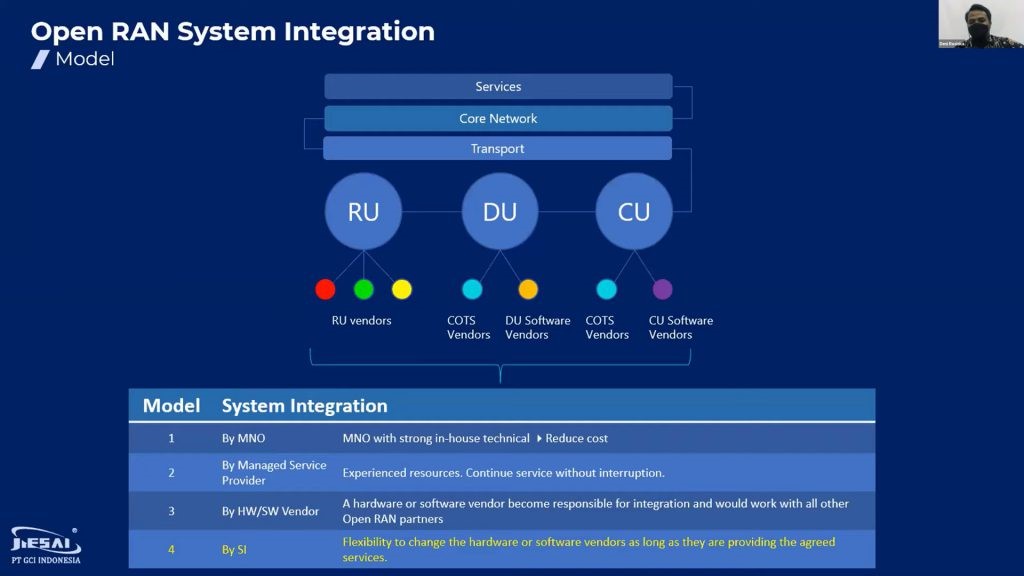
1. The first model is OpenRAN will be integrated by MNO as long as they have strong in-house technical it will hugely reduce their cost for integration, they just buy the hardware buy the software license and integrate by themselves.
2. The second model will be carried on by managed service provider. As we know most operators in Indonesia using any service provider, usually many service providers have so much experience resource with multiple backgrounds they get to integrate OpenRAN without interruption so they can continue this service without interruption while integrating the OpenRAN.
3. The third model is by the hardware or software vendor picks a party who can be strangled and then they take care of the rest. And then they will work with other participating OpenRAN partners.
4. And the last, by system integrators. This is what GCI plan for GCI future by deploying the System Integrator. GCI has the flexibility to change the hardware and software vendor since it can meet their requirement so GCI can change the brand and the specifications of hardware and software they used.
Model Examples of OpenRAN System Integration
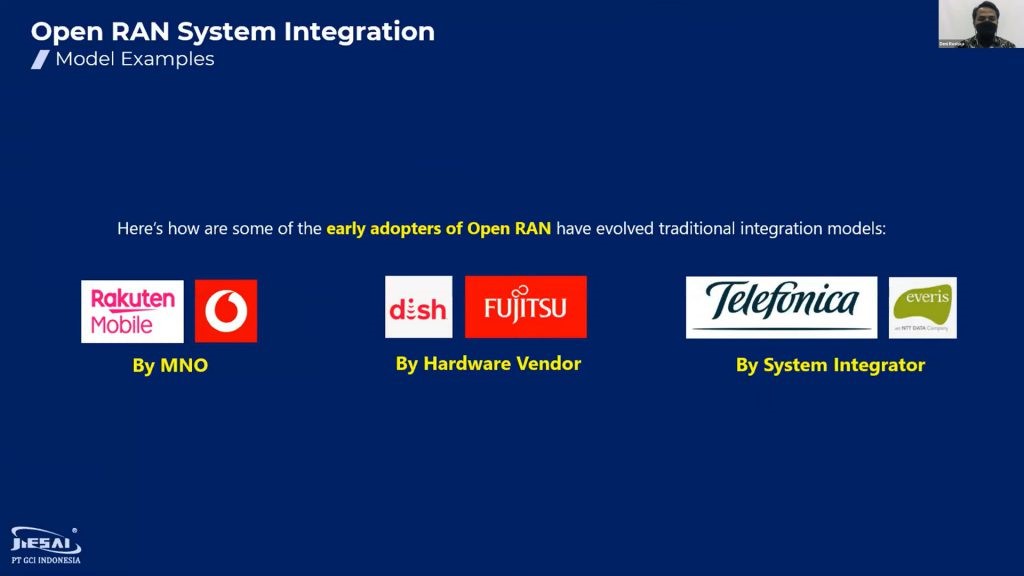
The picture above shows us model examples that have been implemented for the early adopters of OpenRAN. In the left side is by MNO it’s implemented in Japan by Rakuten Mobile and also for the phone implemented by themselves because they have a strong in-house technical resource. Then, in the middle there is Dish in the USA the assigned Fujitsu to integrate everything, in this case, Fujitsu is the hardware vendor for the Dish Fujitsu to do integration form. And the third example is from Telefonica in Peru, it is done by system integrator from Spain Averis.
Context and Business Justification of OpenRAN System Integration
If there is still doubt, then what is the point to transform to system integration because we see the future the nearest future will be 5G and we know RAN has been considered the most expensive part therefore when 5G deployments deploy with the higher frequency it will take more investment with RAN solution traditional and it is estimated that the required cost will skyrocket as we need more RAN hardware. We have legacy RAN, the legacy RAN is costly, restrictive, slow feature delivery, and stifles innovation.
Imagine that how it will be when 5G must-see for outcomes the effect to the cost and if we compare with the OpenRAN, OpenRAN will be 5G ready like GCI already have and by the time it will get more stable, scalable and also enable agile service delivery, faster time to market, and accelerate innovation. Wide range 5G use cases makes system integration discussion going further, not only limited to support MNO, but as well was wide range of entity which has license to deploy private network. It can be manufacturer, public safety body, hospital network, and so on. So OpenRAN system integration is now and in the future is contextual and justified from business point of view.
GCI Service Build Up
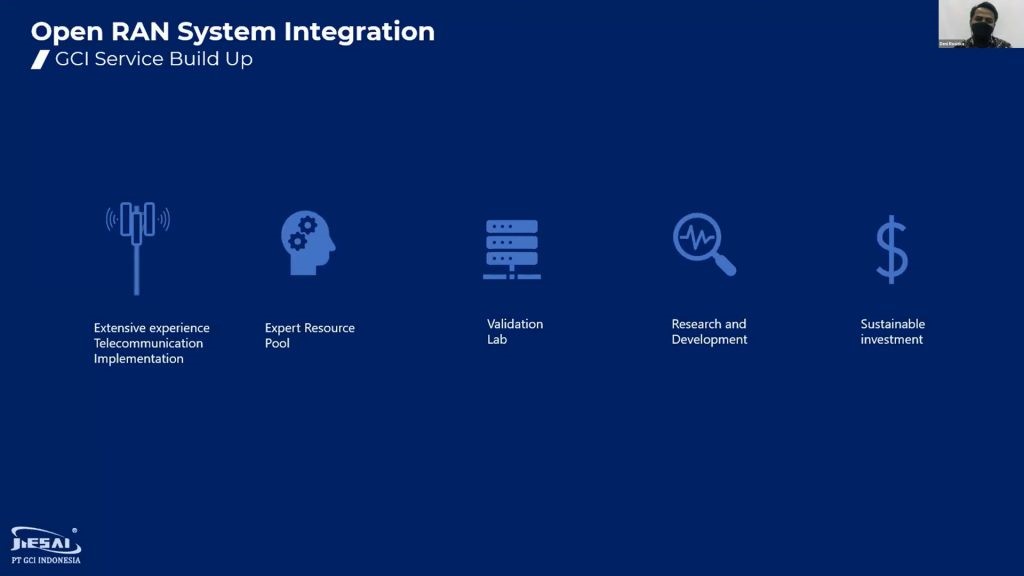
Below are the service build-up plans by GCI to build systems integration services.